Sep 27, 2026
Buying Veterinary Equipment from China: A Practical Checklist for Clinics

Buying Veterinary Equipment from China: A Practical Checklist for Clinics
You have found veterinary cages or treatment tables that appear to suit your clinic. The quotation is interesting, but several questions remain.
Will the equipment match the specifications? What will the complete delivery cost be? Who will move it into the hospital? What happens if a component needs attention after installation?
When buying veterinary equipment from China, evaluate the product and the delivery arrangement together.
The following checklist focuses on stainless steel veterinary furniture and related equipment. More technically complex products may require additional regulatory, installation, and service assessments.
Define the project before comparing prices
Start with a clear equipment brief.
Specify the intended use, required quantities, dimensions, configuration, and delivery location. For powered models, include the relevant electrical requirements. For products involving water or drainage, identify the available site connections.
Ask each supplier to quote against the same brief.
Confirm the exact model and request supporting specifications. Where a product description states a particular material grade, load rating, or feature, ask for the relevant documentation or verification for that model.
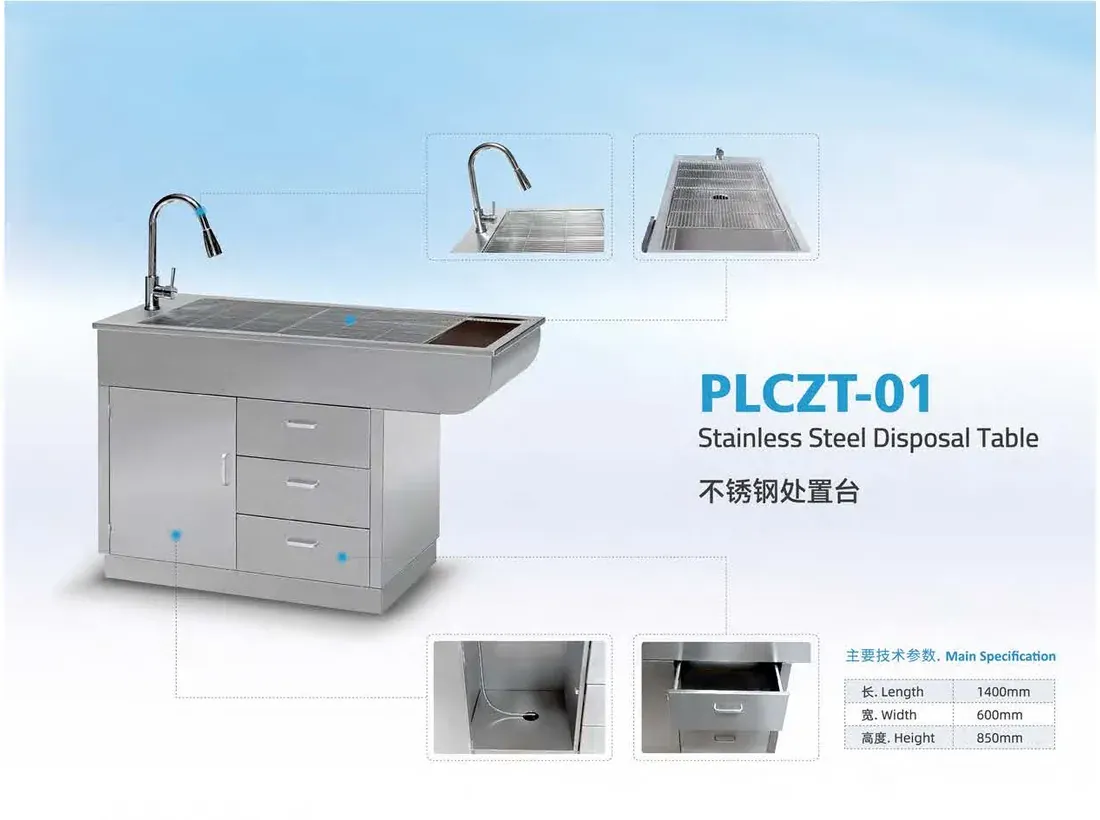
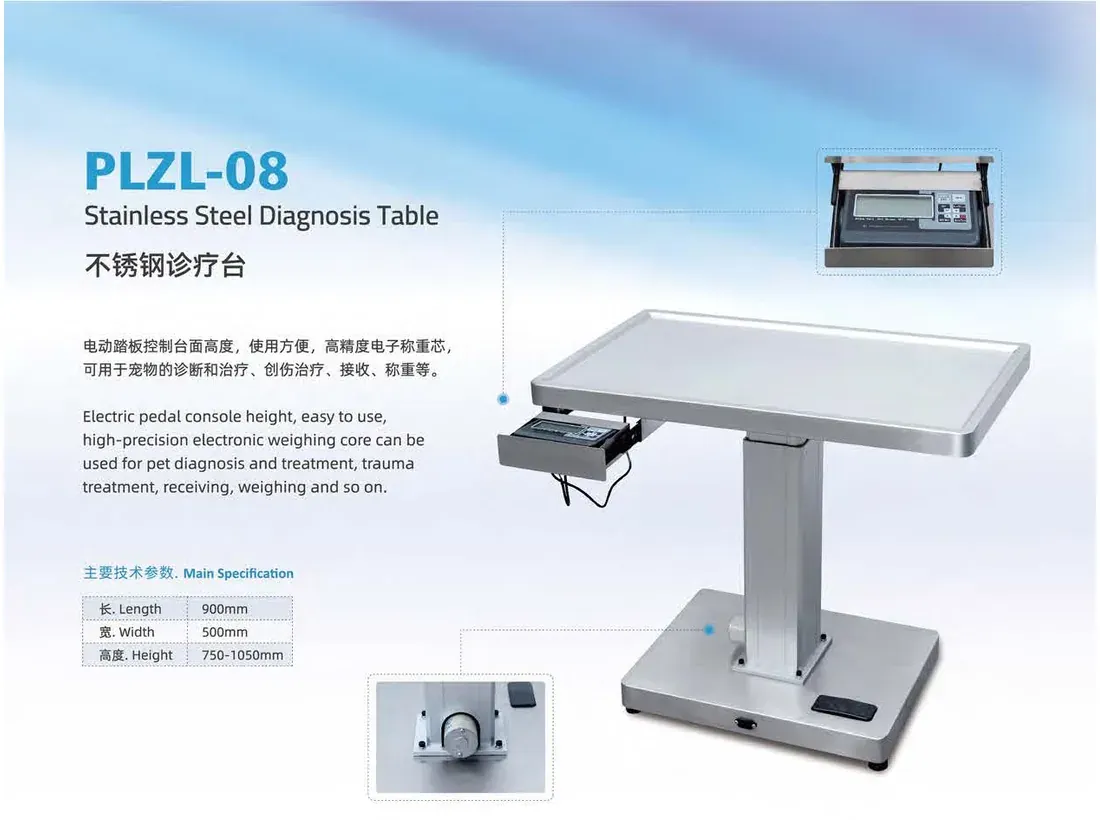
A general catalog image should not be the only reference for an order.
Make sure the approved quotation, specifications, drawings, and order documents describe the same product.
Identify who is supplying and supporting the equipment
Ask whether your commercial partner is the manufacturer, an exporter, or a distributor.
Evaluate the responsibilities that the company is prepared to accept in writing: specification coordination, inspection arrangements, shipping, documentation, and after-sales communication.
Request the legal company name, consistent contact details, and the documents relevant to the transaction. Ask how you can verify any certification or conformity claim, including whether it applies to the actual model being offered.
Before payment, confirm applicable product and import requirements with a qualified local adviser or customs broker. Do not treat a supplier’s general certificate as automatic approval for every product or destination.
Compare the complete project cost
Use a comparison sheet that separates the major cost categories:
Cost category | What to confirm |
|---|---|
Equipment | Exact model, quantity, included components, and optional accessories |
Packing and transport | Packing method, shipment dimensions, transport scope, and any separate charges |
Import arrangements | Who handles clearance and which duties or taxes are included |
Final delivery | Exact destination and delivery conditions |
On-site work | Unloading, internal moving, assembly, installation, and required site preparation |
Ongoing support | Spare parts, service arrangements, and costs not covered by warranty |
When a quotation includes several categories in one price, record that clearly rather than adding them twice.
Compare the result with a local quotation on an equivalent basis. Do not compare an overseas equipment-only price with a local price that includes delivery and installation.
For a small order, ask for a complete quotation before assuming direct import is economical. For a larger project, request packing and freight information for the actual combination of products.
Understand what the delivery term includes
Ask for the applicable Incoterms® rule, version, and precise named place.
Under Incoterms® 2020 DDP, the seller is responsible for delivery to the named destination with import clearance completed and applicable import duties and taxes paid. Delivery occurs on the arriving vehicle, ready for unloading. Unloading arrangements and costs need careful confirmation; DDP should not be treated as a promise of internal moving, assembly, or installation.
Before accepting a delivery offer, explain the conditions at your clinic. Include access restrictions, steps, narrow entrances, and whether suitable unloading arrangements are available.
Ask the supplier to confirm that the proposed import and delivery arrangement can be performed for your destination. A delivery label is not a substitute for a workable plan.
Confirm inspection and installation arrangements
Agree on what evidence you will receive before shipment.
Depending on the product, request photographs showing dimensions, included components, door operation, removable parts, or relevant functions. For higher-value projects, discuss whether an independent inspection is appropriate.
Check the packed and assembled dimensions against the complete route into the building.
Ask whether the product arrives assembled, partly assembled, or in separate sections. Obtain the installation instructions in advance and identify who will carry out the work.
Remote guidance can be useful, but it should not be assumed to replace qualified local work where that is required.
At delivery, follow the agreed inspection and damage-reporting procedure. Retain packaging and records as instructed until the condition of the goods has been checked.
Read the warranty as a service agreement
Do not evaluate warranty support by duration alone.
Ask which components are covered, what information is required to assess a problem, and how replacement parts will be supplied. Confirm who pays for freight, local labor, and any work outside the warranty scope.
Discuss time-zone and communication arrangements as well as the first point of contact.
For equipment important to daily operations, ask about spare-part identification and availability before placing the order.
A clear service process is more useful than a general statement that support is available.
Frequently asked questions
Is direct import the right choice for every clinic order?
No single purchasing route suits every project. Compare the complete cost, timing, specification fit, and support arrangements with the available local options.
What should I prepare for an initial delivery quotation?
Provide the products and approximate quantities, destination country, city and postal code, target timing, and relevant access conditions. Final packing and transport details should be confirmed against the agreed order.
Request a project-based quotation from Sinowise
Considering stainless steel veterinary cages, examination tables, treatment tables, or related equipment?
Send Sinowise your product requirements, approximate quantities, and delivery location. Ask for a quotation that identifies the proposed specifications, transport scope, installation requirements, and applicable after-sales terms.
A sound purchasing decision begins with a complete picture—not only a unit price.
www.sinowise.group
Contact :Muriel