How to Plan a Veterinary Treatment Room: Wet-Work Table, Adjustable Table or Mobile Trolley?
Compare a wet-work disposal table, powered treatment table and mobile trolley using verified Sinowise features, dimensions and veterinary room workflows.
Direct answer: A practical veterinary treatment room usually needs three complementary work zones: a wet-work station for procedures involving water and drainage, an adjustable table for examination or treatment, and a mobile trolley for instruments and supplies. The right combination depends on your clinical workflow, available floor space, plumbing and power connections.
This guide compares three verified Sinowise stainless steel products—the PLCZT-01 Stainless Steel Disposal Table, PLZL-07 Stainless Steel Diagnosis Table and PLST-01 Stainless Steel Luxury Trolley—to help veterinary hospitals and clinics plan an efficient treatment room.
Quick Comparison of Veterinary Treatment Room Equipment
| Model | Primary role | Verified features | Dimensions |
|---|---|---|---|
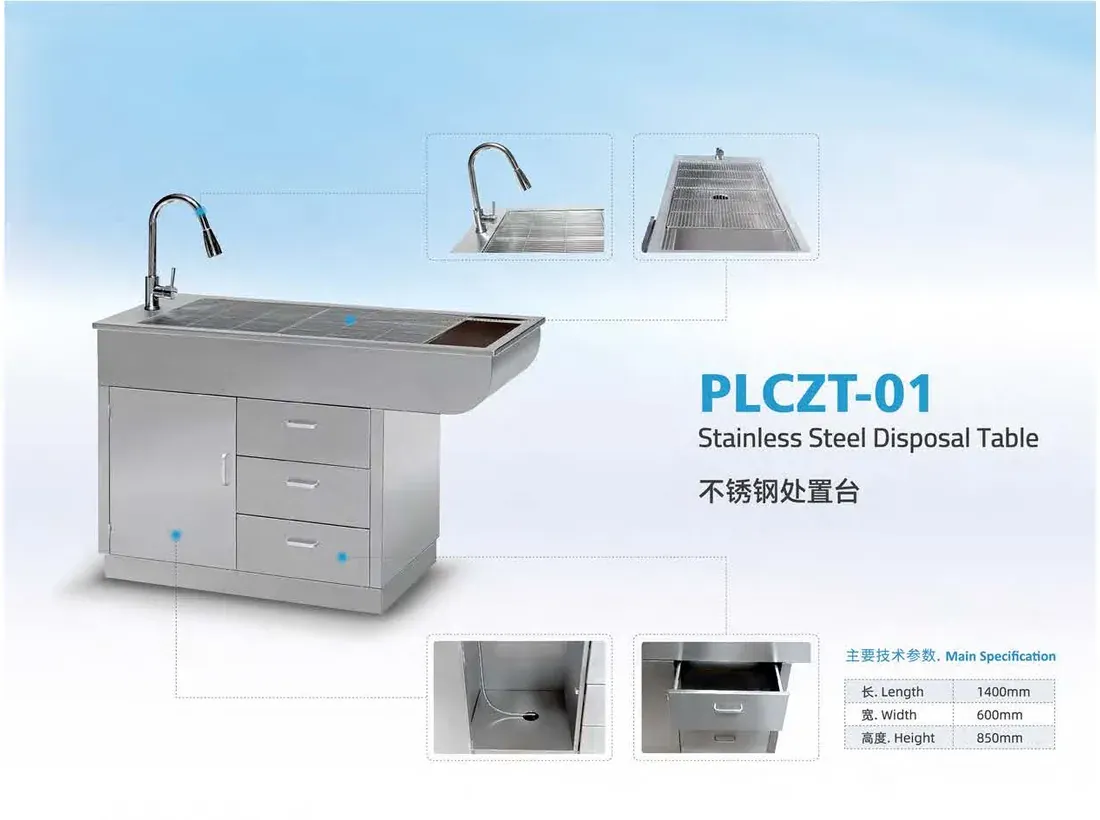
| PLCZT-01 | Wet work, disposal and preparation | Integrated faucet and sink, drainage work surface, cabinet and drawer storage | 1400 × 600 × 850 mm |
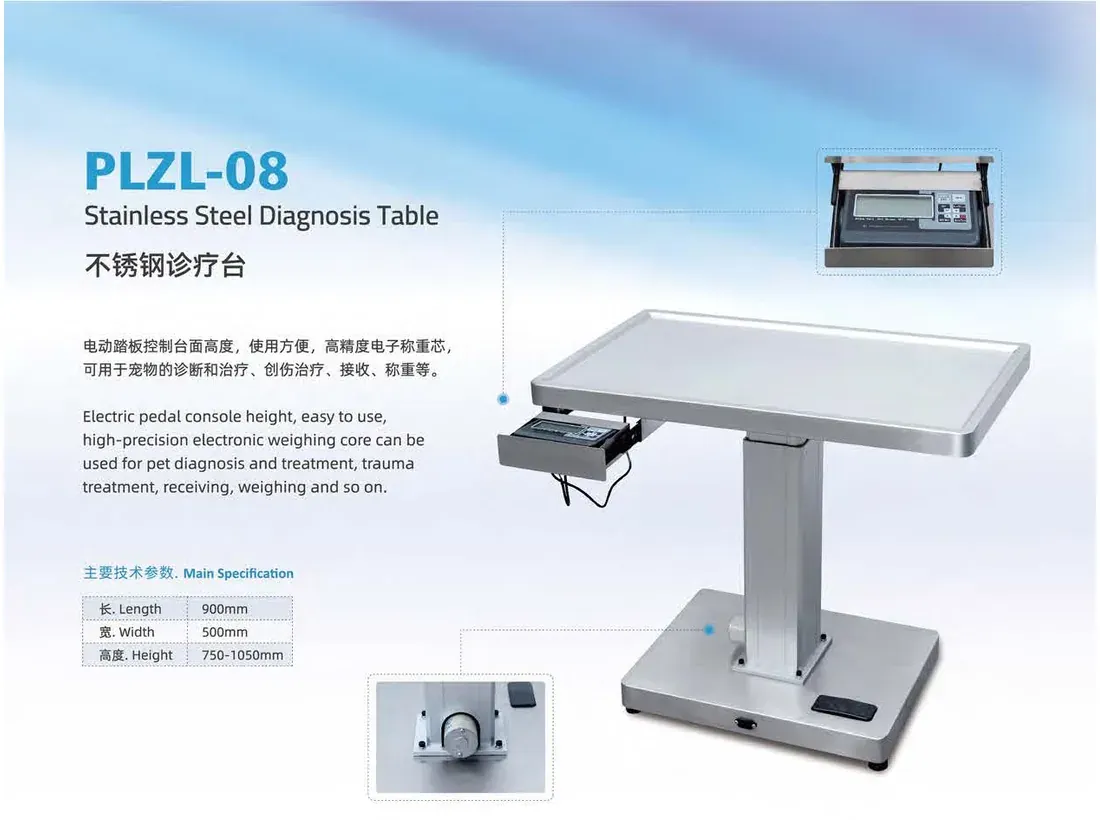
| PLZL-07 | Examination and treatment | Electric pedal height control, drainable mesh work surface, stable pedestal base | 1200 × 600 × 750–1050 mm |
| PLST-01 | Mobile instrument and supply support | Two stainless steel work levels, raised guard rails, integrated drawer, mobile casters | 700 × 450 × 800 mm |
These products serve different tasks. A trolley does not replace a treatment table, and an adjustable table does not provide the sink and enclosed storage of a dedicated wet-work station.
Match Each Station to the Clinical Workflow
PLCZT-01: a dedicated wet-work and preparation station
The PLCZT-01 is designed for veterinary treatment rooms, dental cleaning areas and other wet-work or preparation spaces. Its integrated faucet, sink and drainage work surface keep water-related tasks in one defined area. The cabinet and drawers provide nearby storage for items used during preparation and cleanup.
Choose this type of station when the workflow requires regular rinsing, drainage or a fixed sink. Before ordering, confirm that the room has appropriate water supply and drainage points and that the 1400 × 600 mm footprint fits the planned wall run.
PLZL-07: powered height adjustment for examination and treatment
The PLZL-07 combines electric pedal height control with a drainable mesh work surface. Its verified height range is 750–1050 mm, allowing staff to adjust the working level for examination, dental cleaning and trauma treatment workflows. Foot control can also help keep hands available for positioning the patient and handling equipment.
Select an adjustable table when several clinicians use the same room, when task height varies, or when a fixed-height surface would make routine procedures less convenient. Confirm the required electrical connection and leave enough clearance around the pedestal and tabletop.
PLST-01: mobile support for instruments and supplies
The PLST-01 provides two stainless steel work levels, raised guard rails, an integrated drawer and mobile casters. At 700 × 450 × 800 mm, it can support instrument transport, clinical preparation and treatment-room organization without becoming the main patient platform.
Use a trolley where supplies need to move between preparation, examination and treatment areas. Plan a clear route between rooms and confirm that doors, corners and parked equipment will not block caster movement.
Seven Checks Before Planning the Room
- Define the procedures. List examinations, dental cleaning, wound or trauma treatment, preparation and cleanup tasks that will occur in the room.
- Separate wet and dry activities. Position water and drainage work at a dedicated station so instrument preparation and mobile storage remain organized.
- Measure the usable footprint. Include doors, cabinets, wall protection, plumbing connections and the clearance needed for staff to work around each product.
- Confirm utilities. A wet-work table needs suitable water and drainage; an electrically adjustable table needs an appropriate power connection.
- Plan clean movement routes. A mobile trolley is most useful when it can travel without crossing congested patient or waste-handling paths.
- Keep frequently used supplies close. Drawers, enclosed storage and a mobile trolley can reduce unnecessary movement when their contents are assigned consistently.
- Review cleaning access. Check how staff will reach the work surface, sink, drainage area, storage compartments, pedestal and casters during routine cleaning.
Build the Layout Around the Sequence of Work
Start with the fixed service points
Plumbing and electrical locations usually determine where the wet-work and powered stations can be placed. Confirm these service points before deciding on the final room arrangement.
Keep patient handling space open
Allow staff to approach the adjustable table from the sides required by the clinic’s procedures. Do not use nominal product dimensions as the total room allowance; operational clearance must be added.
Use the trolley as a flexible support zone
Park the trolley close enough for access without narrowing the main route. Its two levels and drawer can be assigned to a consistent preparation sequence, then moved when the room must be reset.
Information to Prepare Before Requesting a Quotation
- Required tasks and expected patient types
- Available room dimensions and preferred equipment positions
- Water, drainage and electrical connection locations
- Required working-height range
- Storage and instrument-movement needs
- Destination country, quantity and any installation constraints
- Any OEM or customization requirements for discussion
Sharing this information helps the supplier compare suitable configurations without assuming that one product can perform every treatment-room function.
Frequently Asked Questions
Is a veterinary disposal table the same as a treatment table?
No. The PLCZT-01 is a fixed wet-work station with a faucet, sink, drainage surface and storage. The PLZL-07 is an electrically adjustable examination and treatment table. They address different stages of the workflow.
When is a powered veterinary treatment table useful?
A powered table is useful when staff need to change working height for different users or procedures. The PLZL-07 provides electric pedal adjustment from 750 to 1050 mm and a drainable mesh work surface.
Does every treatment room need a mobile trolley?
Not necessarily. A trolley is most valuable when instruments and supplies must move between rooms or between preparation and treatment zones. The PLST-01 adds two work levels, guard rails, a drawer and casters.
Can Sinowise discuss customized veterinary stainless steel equipment?
Sinowise states that OEM and customization options can be discussed. Availability depends on the model, quantity and technical requirements, so the requested dimensions, workflow and destination should be included in the inquiry.
Plan a Complete Veterinary Treatment Room
Choose equipment by task: use a wet-work station for sink and drainage activities, an adjustable table for examination and treatment, and a mobile trolley for instruments and supplies. View the veterinary treatment table collection or contact Sinowise with your room layout, utilities, required quantity and workflow details.