Sep 8, 2026
Veterinary Operating Table: Electric vs Hydraulic – Which Is Better for Animal Hospitals?
Compare electric and hydraulic veterinary operating tables by positioning, workflow, maintenance, budget and clinical use before choosing a table for an animal hospital.
Veterinary Operating Table: Electric vs Hydraulic – Which Is Better for Animal Hospitals?
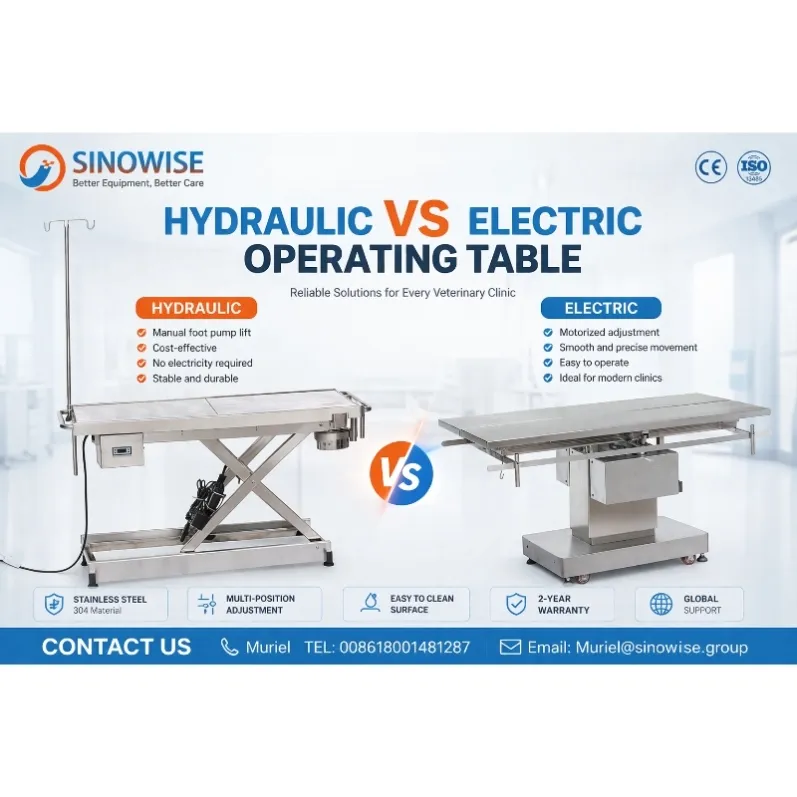
A veterinary operating table is a long-term clinical investment. The right lifting system affects positioning, workflow, cleaning, maintenance and the way a surgical team works throughout the day. Electric and hydraulic tables can both be suitable for animal hospitals, but they serve different priorities.
What is an electric veterinary operating table?
An electric veterinary operating table uses a motor to control one or more movements. Depending on the model, these movements may include lifting, lowering and tabletop positioning. Electric adjustment lets the operator make controlled changes without repeated manual pumping.
Electric tables are often considered when a hospital wants convenient positioning, repeatable operation and efficient workflow. They are particularly useful where the table is adjusted frequently for animals of different sizes or for different surgical procedures.
What is a hydraulic veterinary operating table?
A hydraulic table normally uses a foot-operated or manual hydraulic mechanism to raise and lower the tabletop. It can work without an electric lifting motor, although some products may still use electricity for other functions.
Hydraulic systems are often chosen for their mechanical simplicity. They may suit clinics that want basic height adjustment, have limited access to power at the table position, or prefer a straightforward operating method.
Positioning and control
Electric models generally provide smooth powered adjustment. This can help staff set a comfortable working height and may reduce physical effort during a busy schedule. On advanced models, additional tabletop movements may also be motor controlled.
Hydraulic systems typically require manual pumping for height changes. They can be practical for routine procedures, but the operator should evaluate how often the table must be repositioned and whether manual adjustment fits the team’s workflow.
Clinical workflow
For a high-volume animal hospital, the time and effort required to adjust a table can matter. Electric operation can make frequent height changes more convenient, especially when several clinicians use the same room.
A smaller clinic with fewer daily procedures may decide that a hydraulic table provides the functions it needs. The best choice depends on case volume, animal size, procedure type and the layout of the operating room.
Power and installation
An electric table requires a suitable electrical connection and should be positioned so that cables do not interfere with staff movement or cleaning. Buyers should confirm the power requirements for the destination country before ordering.
A hydraulic lifting mechanism is less dependent on an electrical connection for height adjustment. However, buyers should still check whether the selected table includes powered heating, controls or accessories that require electricity.
Cleaning and material
The lifting system is only one part of the decision. For veterinary use, the tabletop material, drainage design, seams, corners and accessibility for cleaning are also important. Stainless steel is widely used because it offers a durable, hygienic and corrosion-resistant surface for routine clinical care.
Always review the cleaning instructions for the selected model and the disinfectants used by your facility.
Maintenance considerations
Electric tables include motors, control components and cables. The buyer should ask how these components are accessed and what routine checks are recommended.
Hydraulic tables include pumps, cylinders, seals and mechanical connections. These systems also need inspection and maintenance. A simpler mechanism does not mean that maintenance can be ignored.
Budget and total value
Purchase price is important, but it should not be the only comparison. Consider how often the table is used, the number of adjustments per day, staff ergonomics, positioning requirements, service access and the expected working life of the equipment.
An electric table may offer better value where powered positioning improves daily efficiency. A hydraulic table may be a sensible choice when the hospital needs reliable basic adjustment and wants to limit electrical complexity.
A practical buying checklist
Before requesting a quotation, confirm:
• Required tabletop length and width
• Height range
• Maximum load capacity
• Flat or V-shaped tabletop requirements
• Manual or powered tilt
• Heating requirements
• Drainage and collection features
• IV pole or accessory needs
• Available electrical supply
• Cleaning and maintenance workflow
• Destination country and installation space
Which type is better?
There is no single answer for every animal hospital. Electric tables are usually a strong choice when smooth adjustment, frequent repositioning and workflow efficiency are priorities. Hydraulic tables may be appropriate when simple operation, limited power dependence and basic height adjustment are more important.
Sinowise currently offers electric stainless steel veterinary operating tables including PLVOT-001, PLVOT-002 and PLVOT-003. The catalog includes models with different tabletop movements, height ranges and features. Compare the verified specification of each model and contact Sinowise with the intended application, quantity, destination and customization requirements before ordering.